


By Maria Lisak
As universities across Korea prepare for the second semester, many English educators are asking how we can make our classrooms more meaningful, relevant, and empowering. One helpful direction is to shift English learning away from rote memorization and test preparation toward critical digital storytelling, where students use English to create global facing content about life in Korea as they experience it.
We are not talking about scripted “introduce your culture” assignments written for imaginary pen pals overseas. We are not asking students to explain kimchi, bowing customs, or national holidays for the hundredth time. Instead, we are inviting students to become nuanced cultural narrators who tell the stories of Korea’s complexity in their own words, in English, and for a curious world. While these ideas come from work with university students, many can be adapted for younger learners through age-appropriate scaffolding and formats.
Overused Classroom Activities
Let us be honest. Too many assignments fall into the “cultural tourism brochure” trap. Some well-worn formats we can retire or rethink include
● Write a letter to an imaginary foreign friend about a Korean holiday.
● Make a PowerPoint introducing Korean food with pictures.
● Explain three things a tourist should know before visiting Korea.
These activities may meet surface-level speaking or writing goals, but they rarely push students to think critically, reflect on their real lives, or present Korea as more than a packaged product. Worse, they reinforce a K-drama and K-pop monoculture that overshadows Korea’s diversity, tensions, and transformations.
Toward Critical Cosmopolitan Storytelling
What if we supported students in using English to explore real questions, such as
● What are the silent expectations placed on Korean university students today?
● How do rural lifestyles contradict or resist the high-speed image of urban Korea?
● What does a modern Korean woman look like beyond idol standards?
● How do students navigate pressures to uphold family tradition while building their own identities?
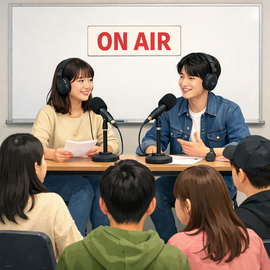
By producing content that addresses these questions through video essays, podcast episodes, Instagram carousels, or augmented reality walking tours, students are not just learning English. They are practicing global literacy, critical reflection, and media authorship.
Seven Content Creation Directions for 2026
These directions come from piloting and refining classroom work with university students, although younger learners could explore simpler versions of many of the same genres. Here are seven genres of digital content your students can create in English, each one an authentic response to the world’s interest in Korea beyond the entertainment industry.
1. Korean Language and Everyday Culture
Have students teach daily etiquette or dialect quirks in English, while connecting them to real social tensions such as age hierarchy or indirect communication. This moves beyond dry grammar lessons and textbook scripts.
2. Professional Life in Transition
Let students compare traditional salaryman ideals with freelance, creative, or non-corporate career paths. They could create videos such as What My Grandparents Do Not Understand About My Career Goals.
3. History Meets the Present
Encourage students to connect local protests, historical events, or civic movements to issues they care about today. Imagine a podcast titled Why May 18 Still Matters to Me.
4. Mental Health and Social Norms
Students can create reflective content about mental health taboos, generational silence, or academic pressure, linking their experiences to broader conversations about shame, stigma, and self-expression.
5. Local Voices, Global Contexts
Invite students to explore how rural life, elder knowledge, or small-town rhythms differ from Seoul’s pace, and reflect on what is being preserved and what is being lost.
6. Sustainability as a Social Story
Move beyond facts and figures. Students can investigate local recycling habits, minimalism, or tensions surrounding overconsumption and image culture.
7. Books, Beliefs, and Quiet Ideas
Invite students to create content inspired by Korean poems, essays, or folktales, interpreting them as guides for life in the digital age. This builds empathy and deep reading alongside language fluency.
As we move into fall, let us empower our university students, and learners at all levels, not just to speak English but to speak from Korea as complex, multilingual thinkers with something to say. When students create thoughtful, authentic content in English, they do not simply improve their language skills. They gain tools for work, citizenship, and self-expression in a global conversation that desperately needs more than hashtags and stereotypes.
Let us teach English not as a test but as a platform.
_______________
Want to adapt these ideas for younger learners? I’d love to hear how others are experimenting with critical storytelling across age groups.
.
Maria Lisak holds an EdD and has over thirty years of EFL experience. She currently teaches administration welfare at Chosun University in Gwangju. Her research focuses on funds of knowledge, civic ESP, and social justice pedagogy. She has published work on autoethnography, liminality in teaching and learning, and has presented regularly for KOTESOL. Her teaching practice integrates experiential, community-based approaches that connect classroom English use to students' civic and professional lives. She is a lifetime member of KOTESOL and AsiaTEFL.
Image by KOTESOL Publications with Microsoft Copilot.


